GOAT – Sneakers & Apparel
- 3.7
- Rating
- 10.00M
- Installs
- Free
- Price

 Analysis by App-foxy
I approached GOAT as a shopping app for people who care about sneakers and designer clothing but do not want to rely on random marketplace listings. My overall impression is that it works best as a focused browsing and buying destination for hard-to-find footwear, older releases, and fashion pieces that are not always available through ordinary retail channels. It is free to install, but the real cost of using it is the time needed to compare listings carefully and make sure a particular item fits your budget and wardrobe.
That distinction matters. This is not the kind of shopping app I would open when I simply need inexpensive everyday shoes. I see it as a more deliberate tool: a place to research a model, watch the market, and decide whether a specific pair or garment is worth pursuing. The app is developed by GOAT and sits in the shopping category, with a Teen content rating. It has been available since Aug 10, 2015, and its long presence is reflected in a community of over 10 million installs.
How GOAT works as a sneaker and designer shopping experience
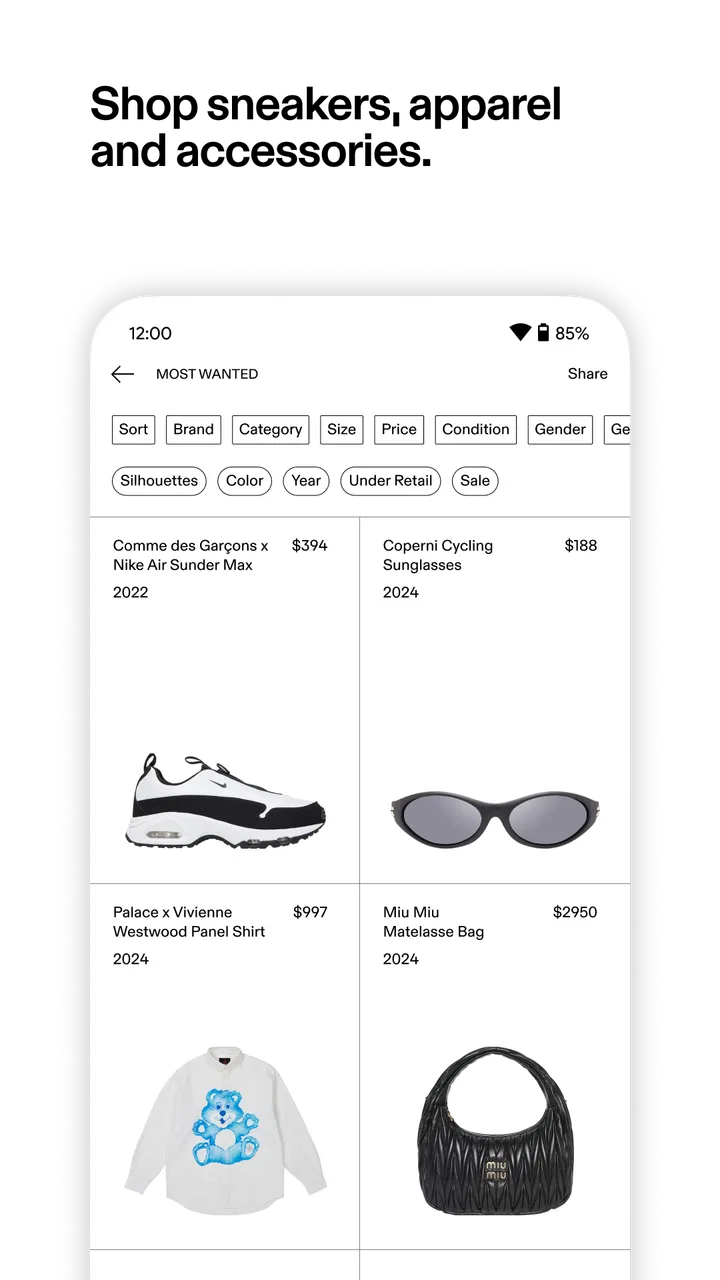
The strongest part of the experience is its specialization. Instead of mixing sneakers with household products, electronics, and unrelated fashion, GOAT keeps attention on footwear and designer brands. That makes browsing feel more intentional. I can move from familiar current styles to older designs without feeling that the app is trying to sell me everything at once.
You May Also Like

 AccuWeather: Weather Radar
AccuWeather Review: A Quick, Clear Forecast for Everyday Decisions
For everyday plans, the best forecast is the one you can understand quickly. AccuWeather makes rain timing, radar, and local conditions easy to act on, with a few trade-offs.

 Hill Climb Racing
Why Hill Climb Racing Still Turns Crashes Into One More Run
A tiny car, a bumpy hill and one more upgrade: Hill Climb Racing keeps resurfacing because its simple chaos makes every near-miss feel personal.

 AliExpress - Shopping App
AliExpress Makes Global Shopping Feel Personal, but Shoppers Bear the Risk
AliExpress turns a global marketplace into a pocket-sized discovery engine. Its reach is useful, its shopping loop compelling, and its trade-offs easy to miss.

 Lords Mobile: Kingdom Wars
Lords Mobile Is a Kingdom-Building Routine, Not a Quick Match
A case-by-case verdict on the building, battles, device demands, and social commitments that make Lords Mobile rewarding for some players and exhausting for others.

 PDF Scanner app - TapScanner
TapScanner Makes Paperwork Easier to Capture, Check, and Share
TapScanner makes scanning with a phone feel less like a rescue operation and more like a dependable step in getting work done. Its capture tools are useful, though not flawless.

 Block Blast!
 Shows How Much a Puzzle Game Can Leave Out
A quiet grid game shows why puzzle players increasingly value instant clarity, repeatable skill and low-pressure play—and where the genre still needs to catch up.
More From Our News Desk
View All News


The catalog approach is especially useful when I already have a model in mind. Searching for a particular silhouette or colorway is more productive than browsing a general fashion store, because the app is built around the idea that shoppers may be looking for a specific release rather than simply “a pair of shoes.” I found that this changes how I make decisions: I spend less time scrolling through ordinary alternatives and more time comparing whether the exact item I want is worth buying.
GOAT also makes sense for people who enjoy the history and identity attached to sneakers. A past release can matter because of its design, its connection to a certain style period, or the fact that it is no longer easy to find in regular shops. The app’s focus on the past, present, and future gives it a broader role than a standard retailer. It is both a storefront and a place to keep track of what is currently interesting in sneaker culture.
One practical tip is to use the app as a research tool before treating it as a checkout destination. Even if I do not purchase immediately, looking at a model helps me understand which version I actually want. Similar names can hide meaningful differences in color, materials, release style, or overall shape. Saving a little time at this stage is valuable because an expensive mistake is harder to correct than a mistaken choice at a conventional shoe store.
Why the focused catalog is more useful than a general marketplace
Compared with a broad marketplace, GOAT feels less chaotic. General resale platforms may offer more categories and sometimes more conversational interaction with sellers, but they also require more effort to judge whether a listing is relevant, accurately described, and worth investigating. GOAT’s identity is clearer: it is aimed at people shopping for sneakers and designer apparel, not at people clearing out an entire household.
That focus helps when I am building a shortlist. Rather than opening several unrelated seller profiles, I can concentrate on the item itself and compare the versions that matter to me. This is a subtle advantage, but it makes a difference for collectors and for anyone who already knows the shape or release they want.
The trade-off is that the app is less useful when my priorities are basic convenience, the lowest possible price, or a quick trip to a nearby physical store. A normal retailer remains better for trying on a shoe before buying it, checking a simple return process, or finding a dependable everyday replacement. GOAT is more suitable when the item itself is the reason for the purchase.
Authentication is part of the value, but judgment still matters
GOAT’s appeal depends heavily on trust. When I look at a sought-after sneaker or designer item, I am not only choosing a color or size; I am also deciding whether the marketplace is a safer route than buying from an unknown individual. The app’s central promise is built around shopping for authentic products, and that is a meaningful reason to consider it over an unstructured resale listing.
Still, I would not treat the word “authentic” as a reason to stop checking everything else. I would review the exact product page, inspect the available condition information, and confirm that the selected size and version match what I intended to buy. Authentication can reduce one kind of risk, but it does not eliminate the risk of ordering the wrong fit, misunderstanding the condition, or paying more than the item is worth to me.
My most useful workflow is to decide on a maximum total budget before I become attached to a listing. It is easy to focus on the product image and postpone the financial decision until the end. A spending limit keeps the purchase grounded. For a rare pair, I would also compare the listing with current retail alternatives and other resale options, not because GOAT is automatically a bad value, but because rarity can make an ordinary price comparison less obvious.
A realistic everyday use case
Imagine I want a pair of sneakers for a weekend trip, but I do not want the same current model everyone is wearing. I could use GOAT to search for an older or less common design, narrow the choice to a few colors, and then check whether the available size fits my normal preferences. Before buying, I would compare the shoes with the clothes I already own and decide whether the distinctive design will actually get regular use.
That last step is important. A resale app can make an unusual item feel essential simply because it is difficult to find. I try to ask myself whether I would still want it if it were sitting on a normal store shelf. If the answer is yes, the app is doing something useful: it is helping me reach an item that conventional shopping may not offer. If the answer is no, browsing has probably become entertainment rather than a sensible purchase decision.
Where the experience becomes less comfortable
The main weakness is the amount of commitment required from the shopper. GOAT is convenient for discovery, but the decision process can feel more complicated than buying a standard product from a familiar retailer. I have to think about rarity, fit, condition, timing, and overall value at the same time. That is manageable for an enthusiast, but it can be tiring for someone who simply wants a straightforward pair of shoes.
Fit is the clearest example. A product page can help me choose a size, but it cannot replace trying on the actual shoe. Different silhouettes can feel very different even when the labeled size is familiar. For that reason, I would be cautious about using GOAT for a first purchase from an unfamiliar brand or shape. The app is a stronger choice when I already understand how that type of shoe fits me.
The app’s shopping focus can also encourage impulse buying. A limited or unusual item creates urgency, and the visual presentation makes it easy to imagine owning it before I have considered how often I will wear it. I would rather add a short pause between finding a pair and purchasing it. Checking my existing wardrobe, setting a limit, and reviewing the size decision are simple habits, but they make the experience more responsible.
Another limitation is that GOAT is not designed around personal styling in the same way a traditional fashion retailer might be. I can discover products, but the app does not replace my own judgment about outfits, comfort, or practical use. If I want a complete look with easy coordination, a conventional apparel store may guide me more directly. GOAT is better when I arrive with a strong interest in the item itself.
Who should use it and who should skip it
I would recommend GOAT to sneaker enthusiasts, collectors, and shoppers searching for a particular release that may not be sitting on a regular retail shelf. It is also a good fit for someone who enjoys comparing designs and wants a more specialized environment than a general marketplace. The app’s audience is not limited to serious collectors, though; a casual buyer can benefit if they already know the model, size, and budget they want.
It is less suitable for someone whose top priority is the cheapest possible footwear. It is also not my first choice for a buyer who needs a shoe immediately for practical reasons, wants to try it on in person, or prefers a simple return-and-replace routine. In those situations, a local store or an ordinary online retailer is likely to create less friction.
Parents and younger shoppers should also remember the Teen content rating when deciding whether the app is appropriate for their household. The rating does not change the shopping experience itself, but it is a useful detail for families managing which apps are available on a device.
Small habits that improve the buying decision
I would begin by searching with a clear target rather than browsing indefinitely. Once I find a promising item, I would verify the size, color, and version before moving on. This prevents a common mistake in sneaker shopping: becoming excited about one image while accidentally selecting a nearby variation that does not match the original intention.
Next, I would separate “hard to find” from “good value.” Scarcity can explain why an item attracts attention, but it does not automatically make it comfortable, versatile, or worth the money. I would consider how many outfits it works with and how often I expect to wear it. This is particularly important with distinctive designer pieces, which may look impressive in the app but spend most of their time in a closet.
Finally, I would use the app to build knowledge over time. Looking at several versions of a model can teach me which shapes suit my taste and which details I consistently ignore. That makes later purchases faster and more confident. In my view, this is one of GOAT’s less obvious strengths: it can improve a shopper’s eye, not just provide a place to buy.
Performance, availability, and overall value
GOAT is free to download, which makes it easy to explore before deciding whether the marketplace suits me. The current version is 2.11.0 and requires at least OS 10. That requirement is worth checking before installation, especially if the phone is older. Once available on a compatible device, the app’s focused purpose is easy to understand: it is for discovering and purchasing sneakers and designer apparel rather than managing a broad shopping list.
The app has an average rating of 3.7 from around 37 thousand ratings, alongside roughly 9.6 thousand written reviews. I read that as a sign of a useful but not universally effortless experience. The rating does not make me dismiss the app, because resale shopping naturally involves more variables than buying a standard product directly from a manufacturer. It does make me approach each order carefully and avoid assuming that every purchase will feel as simple as a normal retail transaction.
For me, the value is strongest when the app solves a specific problem: finding a design that ordinary stores do not carry, narrowing down a hard-to-find release, or giving me a more structured alternative to an unknown seller. The value is weaker when the same type of shoe is easily available elsewhere at a lower overall cost. In that case, the specialized marketplace may add more browsing pleasure than practical benefit.
My advice is to use GOAT with a collector’s curiosity and an ordinary shopper’s discipline. Enjoy the discovery, but keep checking fit, budget, versatility, and the exact item selected. That balance lets the app’s strengths stand out without allowing the excitement of rarity to make the decision for you.
My final recommendation
After spending time with it, I see GOAT as a strong specialist shopping app rather than a universal replacement for every shoe store. Its focused catalog, emphasis on authentic sneakers and designer brands, and usefulness for past and current releases give it a clear identity. I especially like it when I am looking for a specific item and want a more organized experience than a general resale marketplace can provide.
I would not recommend it blindly to someone who wants the simplest, cheapest, or most practical purchase. Fit uncertainty, the need for careful comparison, and the temptation to buy based on scarcity all require attention. But if you already care about sneakers, know roughly what you want, and are willing to make a considered decision, the app earns a place on your phone.
In short, GOAT is most convincing when it helps me find something I genuinely want rather than persuading me to want something merely because it is difficult to find. For collectors and style-conscious shoppers, that is a worthwhile distinction. For everyone else, a conventional retailer may still be the better answer.
FAQs for GOAT – Sneakers & Apparel
01What is GOAT and what can I buy on the app?
GOAT is a leading platform for buying and selling sneakers, apparel, and accessories. The app offers an extensive selection of new and used items from top brands like Nike, Adidas, and Supreme. Users can browse through collections, discover rare finds, and even participate in sneaker auctions.
02Is everything on GOAT authentic?
Yes, GOAT prioritizes authenticity and has a rigorous verification process. Every item goes through a thorough inspection by their in-house team of experts to ensure that you're receiving genuine products. This commitment to authenticity has made GOAT a trusted name among sneaker enthusiasts worldwide.
03How does shipping work on GOAT?
GOAT offers global shipping, and the process can vary depending on the location and the seller. Once you make a purchase, the seller ships the item to GOAT for verification. After authentication, GOAT ships the item to you. Shipping times can vary, but they provide tracking for your convenience.
04What payment methods are accepted on GOAT?
GOAT supports a variety of payment methods to accommodate users worldwide, including major credit cards, PayPal, and Apple Pay. This flexibility ensures a seamless checkout experience. Note that prices on the app may include taxes and shipping fees, which are calculated at checkout.
05Can I sell my items on GOAT?
Yes, users can sell their sneakers and apparel on GOAT. To list an item, you need to create a seller account, provide detailed images, and set your asking price. Once your item sells, you ship it to GOAT for verification, ensuring the buyer receives an authentic product.
Pros
- Extensive sneaker collection.
- User-friendly interface.
- Secure payment options.
- Authenticity guarantee.
- Frequent updates with new releases.
Cons
- High shipping fees.
- Limited customer support.
- Occasional app crashes.
- High demand items sell out fast.
- Some items are overpriced.

GOAT – Sneakers & Apparel
Gallery